
Choosing the Right Scope for Your CheyTac Precision Rifle
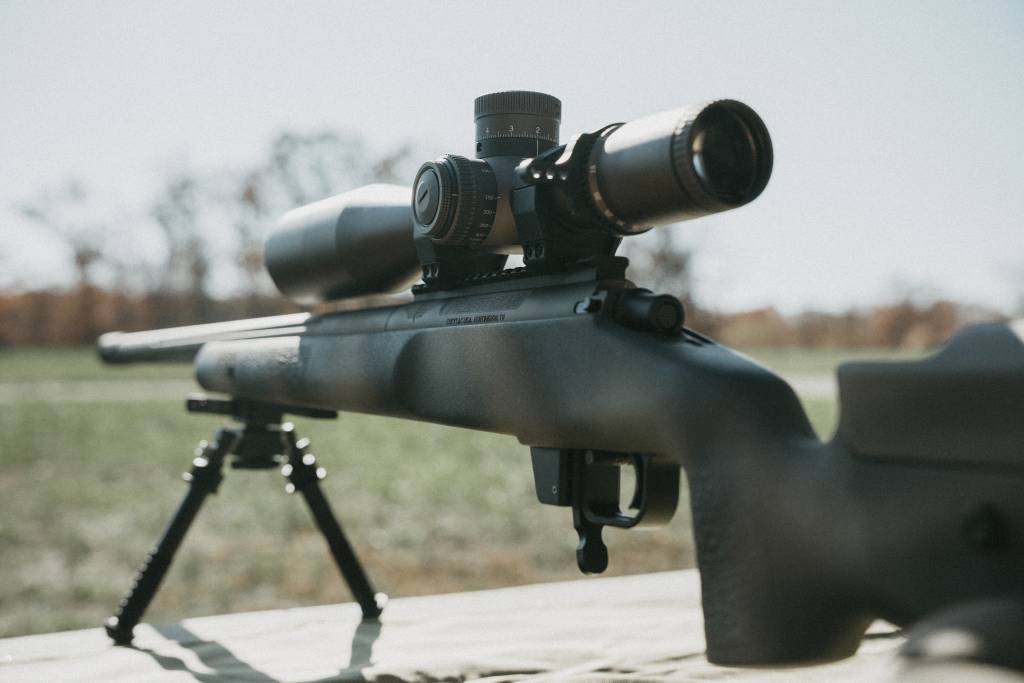
For most precision-shooting needs, shots will be placed well beyond the limits of the naked eye, meaning performance will largely depend on the quality of the weapon’s optic. You can have the best action and barrel money can buy, but if the scope can’t keep up, you’re leaving performance on the table.
CheyTac’s lineup ranges from AR-platform rifles built for mid-range work to ELR systems that reach beyond 2,500 yards. That’s a huge spread, and no single scope covers it well. An optic designed to work at the CT15’s range wouldn’t work well with the M200, and vice versa.
CheyTac offers a focused selection of Nightforce scopes to pair with our line of precision weaponry based on their versatility and stellar reputation in both casual and professional shooting communities. The lineup includes practical SHV models for hunting and general field use, along with ATACR models for the most demanding long-range rifle applications.
Cheytac is now offering Leupold optics and I would like you to include them along with the NightForce. We’re actually having some difficulty with NightForce denying optics to some of our international customers. We are currently using the Leupold MARK 5HD 7-35×56 M5C3 FFP Tremor 3. We are also using the Leupold FFP PR2- MIL reticle for the M200 Intervention going down range for ELR Sniper use. Please integrate the Leupold brand into this article and include images of the reticle which can be found on the websites.
Choosing The Right Reticle
The reticle is the crosshair pattern you see when you look through the scope. At its simplest, it tells you where the bullet is going. As distances increase, the reticle can help compensate for environmental factors by providing a built-in measuring system.
MOA, or minute of angle, is common among American hunters and recreational shooters. MIL, or milliradian, is widely used in military and advanced-precision contexts, where shooters and spotters communicate rapid corrections.
For most shooters, the MOA reticle is a more straightforward and versatile option. It provides clear subtension marks for elevation, and wind holds without overwhelming the sight picture. Nightforce’s SHV and ATACR lines both feature this reticle configuration, and it makes for a solid starting point for short- to mid-range shooting.
The TREMOR3 and TREMOR5 reticles available in the ATACR 7-35x56mm F1 play a more specialized role. They’re designed for rapid wind and elevation holds, making them better suited for advanced ELR shooters who are operating at ranges that would benefit from more in-eye variable calculation.
Short To Mid-Range Shooting Applications: Nightforce SHV 3-10x42mm
The CT10 and CT15 are CheyTac’s AR-platform rifles, which makes optic weight and handling especially important. When using these platforms in the field, you want them to remain responsive and mobile rather than being turned into heavy bench-style platforms.
The Nightforce SHV 3-10x42mm fits that role perfectly. At 20.8 ounces and 11.6 inches, it’s the lightest and most compact Nightforce option in our optical lineup.
The 3x bottom end gives the shooter a wider field of view for faster target acquisition. At the ranges these rifles typically work at, this means you can easily track a darting animal without getting lost in the weeds.
At the top end, 10x gives the shooter enough resolution for moderate-range precision without adding unnecessary weight. The 42mm objective also keeps the scope profile reasonable, helping the CT10 and CT15 remain balanced and quick to aim.
The SHV 3-10x42mm uses a 30mm tube with 90 MOA of total elevation adjustment and 70 MOA of windage adjustment. It uses capped turrets with 0.25 MOA clicks, which helps keep a zero on a rifle that may be trucked through rougher field conditions that can mess with exposed dials.
Available reticle options include MOAR, IHR, and Forceplex configurations, with illumination varying by setup. Not all configurations include illumination, so check before you buy if low-light visibility matters to you.
Hunting Ranges: Nightforce SHV 5-20x56mm
As bolt-action hunting rifles, the Paladin and SAPP platforms operate at much longer distances than the CT15/10 and have an entirely different set of requirements. A good hunting optic will provide plenty of light transmission for low-light conditions and more exact turret functionality for field adjustments once a target is found.
The Nightforce SHV 5-20x56mm is the strongest match in the SHV family for those demands. Its 56mm objective is built around light gathering, which is especially relevant during the first and last minutes of legal shooting light when many hunters are most likely to see game.
The 5x low end remains practical for closer field shots, while the 20x top end gives the shooter more resolution for longer cross-canyon or open-country opportunities. That makes the scope a better fit for SAPP and Paladin owners who want to use more of the rifles’ distance potential without moving into a heavier ATACR configuration.
The scope uses a 30mm tube, measures 15.2 inches, and weighs 30.5 ounces. It includes an illuminated MOAR reticle with center illumination, 0.25 MOA clicks, fully multi-coated optics, and parallax adjustment from 25 yards to infinity.
The exposed elevation turret with ZeroSet is the feature that really earns its place on a hunting rifle. You dial up for a 600-yard shot, take it, and the ZeroSet lets you snap back to your original zero instantly.
The SHV line also uses a second focal-plane reticle design, which affects how the scope is used. In a second focal plane scope, the reticle stays the same size regardless of magnification. When you zoom in, the image gets bigger, but the crosshair doesn’t. This means the hash marks and subtension lines on the reticle are only dimensionally accurate at one specific magnification (usually the highest setting).
For hunting, this is rarely a problem. Most hunters dial their turrets for elevation and use the center crosshair to aim rather than holding over with reticle marks. The reticle stays clean and uncluttered at low magnification, which makes target acquisition faster when a deer appears at 80 yards, and you don’t have time to adjust the power ring.
Where second focal plane becomes a liability is in precision and combat applications at extended distance. A marksman using reticle holds for wind correction or ranging a target needs those subtension values to be accurate at whatever magnification they happen to be on, since an incorrect mil reading can lead to a wide miss at longer ranges in life-or-death circumstances.
We also stock the SHV 4-14x56mm, which shares the same 56mm objective but tops out at 14x. If your hunting is mostly timber and moderate distances, the 4-14 does everything you need at a lower price and a few less ounces. It doesn’t allow the hunter to take advantage of the SAPP or Paladin’s full distance ratings, however.
Extreme Long Distances: Nightforce ATACR 7-35x56mm F1 And The Leupold Mark 5HD
The M200 Intervention® and M300 Praetorian sit in a different category from CheyTac’s AR-platform and hunting rifles. These are extreme long-range systems, which means even errors measured in millimeters can make the difference between a shot on target and a wide miss.
Nightforce
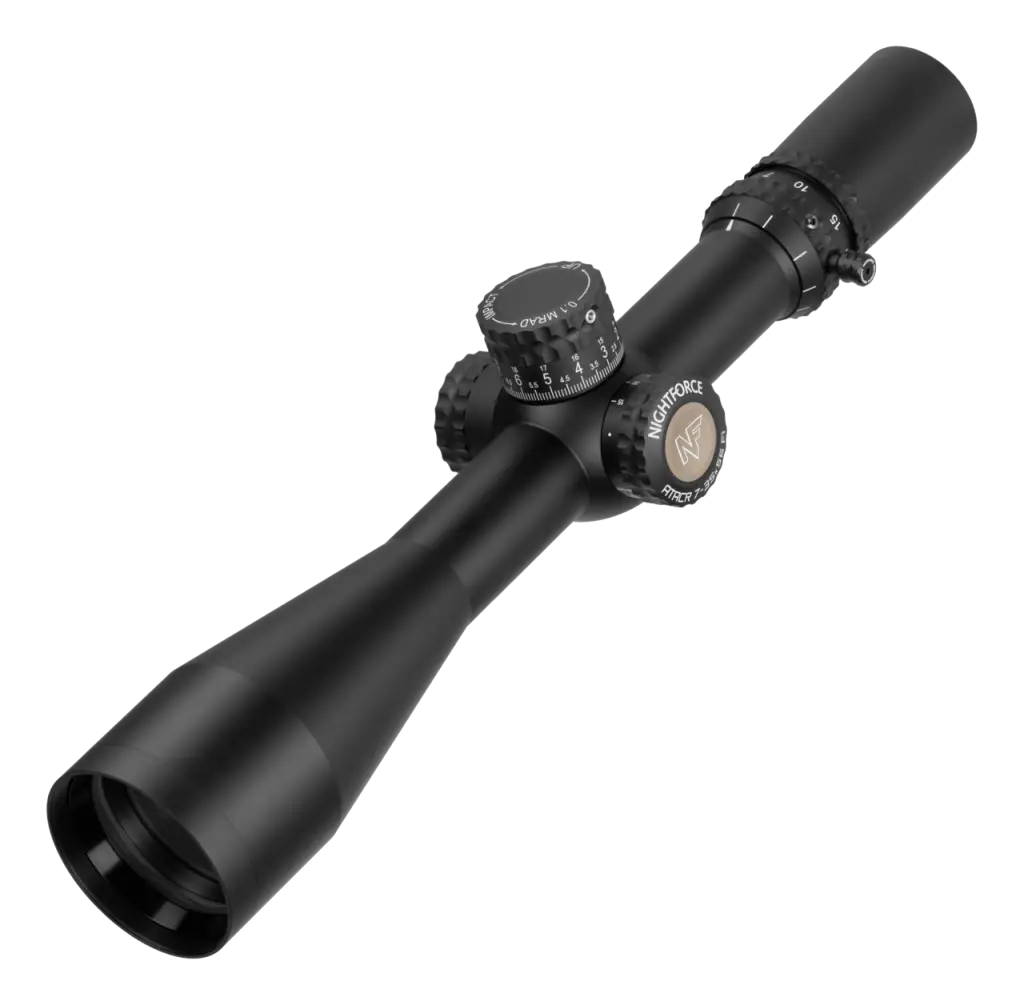
The Nightforce ATACR 7-35x56mm F1 is the strongest match for that role. We describe it as the perfect addition to a CheyTac rifle, and a quick look at the spec sheet makes clear why it belongs on our most demanding precision firearms.
First focal plane is what separates F1 from anything in the SHV line. The reticle scales with magnification, so if a target measures 2 mils at 35x, it still measures 2 mils when you drop to 15x.
That consistency is a lifesaver at extreme distances, since shooters are constantly shifting between magnification settings as they line up their shots. If the reticle measurements change depending on the magnification you’re on (as is the case with the SHV line), you would need to redo the math each time you change magnification.
The ATACR 7-35x56mm F1 uses ED glass to support sharp images across the magnification range. That makes a difference at higher power, where lower-quality optics can degrade image quality, making target identification and correction more difficult.
The scope also includes a 34mm tube, 100 MOA or 29 MRAD of total elevation travel, ZeroStop, DigIllum digital illumination control, a Power Throw Lever, and parallax adjustment from 11 yards to infinity. Available reticles include MOAR, MOA-XT, MIL-R, MIL-C, MIL-XT, TREMOR5, and TREMOR3.
CheyTac also offers the ATACR 5-25x56mm F1, which remains an excellent option for shooters who want ATACR quality with lower bottom-end magnification and a broad field of view. For the M200 Intervention® and M300 Praetorian, however, the 7-35x top end provides more functionality at the extreme long distances the platforms can reach.
Leupold
CheyTac now offers the Leupold Mark 5HD line alongside Nightforce for shooters who want a lighter ELR optic or who need broader international availability.
The Mark 5HD 7-35×56 M5C3 FFP is the most direct alternative to the Nightforce ATACR. It covers the same 7-35x magnification range, uses the same 35mm tube diameter, and is available with the same Tremor 3 reticle found in the Nightforce.
The primary difference between the two is weight, as the Mark 5HD comes in at 33 ounces, making it one of the lighter scopes in its magnification class. The M200 and 300 are already large rifles, so shedding some weight in the optic can make a significant difference, especially in field conditions.
The M5C3 turret system provides 0.1 MIL click adjustments with ZeroLock, the company’s proprietary locking mechanism that prevents accidental dial movement during transport or handling. Leupold builds the Mark 5HD around its Professional-Grade Optical System with Twilight Max HD light management, designed for clarity and light transmission in challenging conditions. The scope is waterproof, fogproof, and shockproof, and like all Leupold optics, it’s designed and built in the United States.
For shooters who want a wider magnification range with a lower bottom end, CheyTac also offers the Mark 5HD 5-25×56 M5C3 FFP with the PR2-MIL reticle. This configuration gives the M200 or M300 a versatile optic that can handle closer target acquisition at 5x while still reaching out to ELR distances at the top end.
Both Leupold configurations share the same first focal plane construction as the Nightforce ATACR, so reticle subtensions remain accurate across the full magnification range regardless of which power setting you’re using.
Matching The Optic To The Rifle
Every Nightforce scope in our lineup is there because it pairs well with a specific rifle and the conditions they’re designed to work in. The SHV line handles hunting and field work where weight and practicality matter, while the ATACR line handles the distances where the rifle’s performance is dependent on the quality of the optic.
If you’re not sure which one fits your setup, start with what you’re actually going to do with the rifle. The answer usually sorts itself out from there. All five models are available on the CheyTac website, along with Nightforce X-Treme Duty rings and mounts.
FAQs
The Nightforce SHV 3-10x42mm is the best fit for the CT10 and CT15 because it keeps the rifle compact, responsive, and practical for close to moderate distances. Its 3-10x magnification range, capped turrets, 42mm objective, and lighter profile make it a strong match for CheyTac’s AR-platform rifles.
The Nightforce SHV 5-20x56mm is the best match for the SAPP and Paladin because it balances magnification, low-light performance, and field dialing. The 56mm objective, illuminated MOAR reticle, exposed elevation turret, and ZeroSet feature make it especially useful for hunters who may need to take precise shots across varied terrain.
The M200 Intervention® and M300 Praetorian are built for extreme long-range applications, so they require an optic with high-end glass, first focal plane reticle behavior, substantial elevation travel, and precise tracking. The Nightforce ATACR 7-35x56mm F1 provides the magnification, reticle consistency, and mechanical adjustment needed to support those rifle systems at extended distances.
