
Precision Rifles In Law Enforcement: Matching The Platform To The Mission
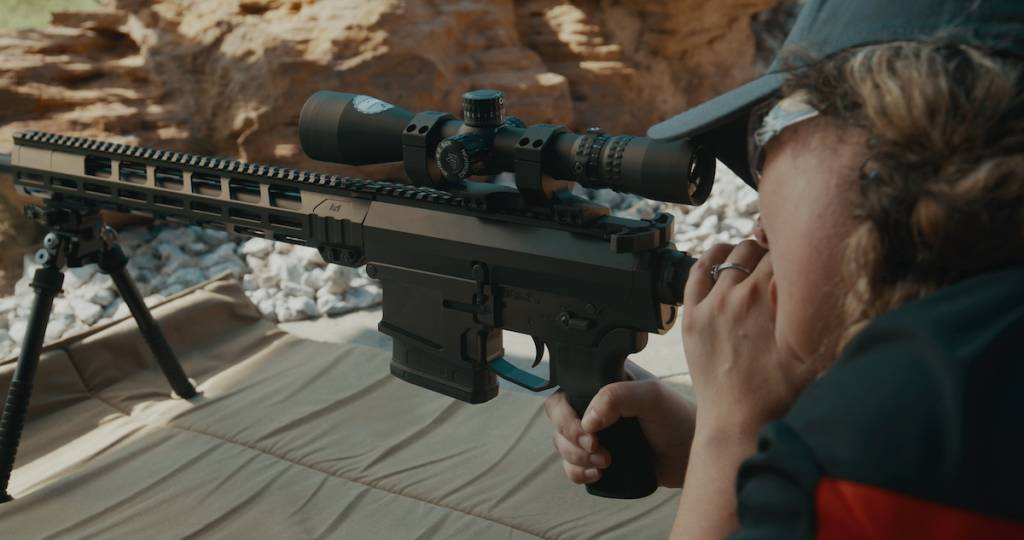
Precision rifles play a bigger role in modern law enforcement than most people realize. The public image tends to center on a single high-stakes scenario, but the reality is broader and more routine. Agencies deploy precision rifles across a range of operations that most people never hear about because, when they work, the drama is minimized.
Accountability is at the core of law enforcement precision shooting. Every shot has to be justified, documented, and defensible, which sets a higher bar than what you see in most military applications.
A precision rifle gives a trained marksman the ability to put a round exactly where it needs to go. In an urban setting, a miss doesn’t just mean a miss, it means a round going somewhere it shouldn’t, with bystanders and liability on the other side of it.
That same precision lets a marksman address a specific threat without resorting to methods that put more people at risk. Rather than resorting to an explosive breach or area-effect tools, precision weaponry ends a situation with a single accurate shot if the situation demands it.
Law enforcement marksmen work in situations where hesitation and equipment problems get punished fast. The rifle needs to be something the shooter trusts completely, because when stress is compressing your decision-making, the last thing you need is to be second-guessing your gear.
Counter-Sniper Operations And Public Venue Overwatch
Counter-sniper work has become one of the most important and least understood law enforcement applications for precision rifles. The role has grown as agencies plan for large public gatherings at major venues and events where an elevated threat could affect hundreds or thousands of people.
In this context, the marksman’s first job is usually observation. The rifle and optic become part of a surveillance position, giving the team a way to observe and communicate about crowd movement and monitor potential threats.
Public venue overwatch have different requirements for a rifle than typical urban SWAT work. Large event spaces (I.E. stadiums, arenas, outdoor concerts, etc.) can extend sightlines well beyond the typical law enforcement engagement zone.
That does not mean every agency needs an extreme long-range rifle for every event. It does mean venue security requires agencies to think carefully about distance, angle, visibility, and the type of threat the team may be asked to identify before any engagement decision is made.
A marksman might spend an entire assignment behind the optic and never fire. That’s usually the best possible outcome, with the rifle earning its place based on what the marksman saw and reported, rather than eliminating a target. If a shot does need to be taken, the rifle has to deliver a controlled response in crowded, complicated environments.
Rural Operations And Extended-Distance Identification
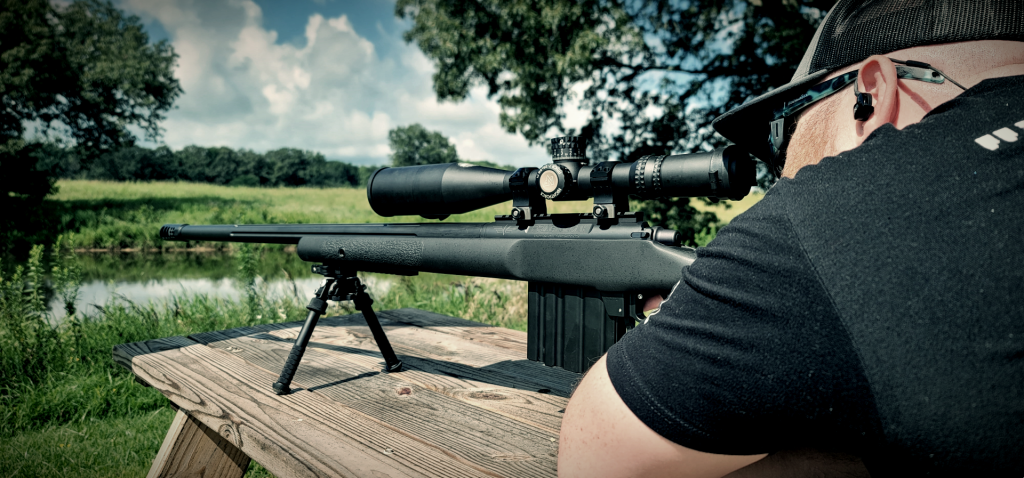
Rural agencies deal with distance in a way that urban departments don’t. The jurisdiction might be mostly open ground, and response times are dictated by how far you have to drive rather than how many crowded city blocks you need to navigate through.
When a barricaded subject is sitting in a structure with hundreds of yards of nothing around it, weaponry capable of operating at standoff distances is required. The precision rifle lets the team stay far enough back to be safe while still maintaining observation and the ability to act if needed.
The farther back the team has to operate, the more the rifle matters. At extended distances, the marksman is already managing too many variables to allow the rifle to add its own problems on top of that. A well-constructed precision platform gives the operator a reliable and predictable performance at safer distances.
High-Risk Warrant Service
Most law enforcement precision rifle deployments are quieter than people expect. On high-risk warrants, the marksman sets up with eyes on the structure (doors, windows, anything that moves) and feeds information to the entry team before they go in.
That observation role is where the rifle and its optic earn their place in the operation. The marksman might spot the subject moving or notice important, life-saving details like the presence of a weapon. This information can help determine how the entry team approaches, and none of it requires a shot.
A precision rifle also changes the math on how a scene develops. A subject who knows they’re being watched from a covered position tends to make calmer decisions than one who thinks they have room to run (or fight).
Not every law enforcement marksman is locked into the sniper role. A lot of officers rotate among entry, perimeter, overwatch, and precision assignments based on staffing and mission needs, so it pays to have platforms that fit the way the team actually works.
CT10 And CT15: Precision AR Platforms For Urban Law Enforcement
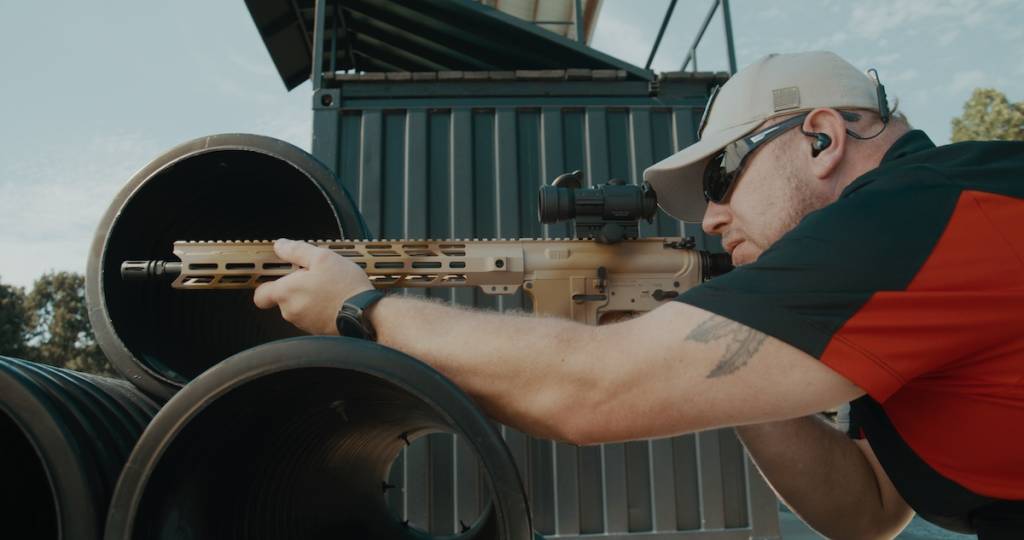
The CT10 and CT15 are CheyTac’s semi-auto AR platforms for urban and mobile LE work. The controls are standard AR, so anyone who’s run a patrol carbine already knows how these rifles work, thereby eliminating a training gap that specialty platforms can create.
For optimal distance and energy delivery, the CT10 is the more powerful AR platform option, coming in .308 Winchester. In LE circles, .308 is still the default precision caliber thanks to the deep ammunition selection and the decades of institutional experience behind it.
The CT10 sits in a useful middle ground between a patrol carbine and a dedicated bolt gun. For agencies that want a single platform they can take from a vehicle to an overwatch position to an entry support role without switching weapons, an AR-10 in .308 covers a lot of ground.
On the other hand, the CT15 is built for a lighter, more mobile touch. As CheyTac’s AR-15 platform, it’s best seen as a rapid-deployment carbine for agencies that want a precision-capable rifle with familiar handling and quick movement.
That’s especially useful when officers need to go from arriving on-scene to being ready to operate as quickly as possible. The CT15 isn’t meant to replace a dedicated long-range rifle, but it’s a solid fit for agencies needing a capable patrol or tactical platform for shorter-range work.
Put together, the CT10 and CT15 give law enforcement two semi-auto options before you get into specialized bolt-action territory. The CT10 leans toward more reach and energy, while the CT15 is all about mobility and the familiar AR-15 feel.
M300 Praetorian: Extended-Distance Precision For Specialized Units
The M300 Praetorian is in a different league for law enforcement. It’s not your standard municipal SWAT rifle and shouldn’t be the go-to for routine warrants or typical urban overwatch.
The platform is built around CheyTac’s .408 CheyTac® and .375 CheyTac® chamberings. Those cartridges place the M300 in the extreme-distance category for agencies or units whose operating environments justify that level of reach.
Large public venues are a good example. Stadiums, airports, ports, and open-air event spaces can create distances and sight lines that go well beyond what most traditional law enforcement rifles were designed to handle.
Rural containment brings up the same issue. When the terrain keeps you from getting closer, or you need to watch a threat from a safer distance, specialized precision rifles give the team options you just don’t get with a standard patrol gun.
The M300 Praetorian also comes into play for counter-sniper planning by specialized units. Here, rather than just worrying about a threat at normal rifle distance, you’re thinking about someone using distance or terrain to their advantage.
With an effective range of over 2,500 yards and an 18-pound weight (empty), the M300 handles differently than the M200 Intervention®. That makes it the CheyTac platform to look at when you need extreme-distance capability but don’t want to step all the way up to the full M200 system.
Selecting The Right Rifle For The Mission
The right law enforcement rifle always starts with the mission. A patrol rapid-response job doesn’t ask the same things from a platform as a big-venue counter-sniper assignment.
For urban SWAT, the CT10 and CT15 give agencies semi-automated options with controls their officers are well acquainted with. The CT10 is for jobs calling for .308-level precision and overwatch capability, while the CT15 is the lighter option for patrol work and situations where mobility is the name of the game.
For specialized units with extreme-distance needs, the M300 Praetorian is in its own category. It’s the right platform for agencies that need .408 CheyTac® or .375 CheyTac® performance for big venues, rural terrain, infrastructure protection, or counter-sniper work.
Precision isn’t just about distance and reach. The rifle has to match the mission, and the officer behind it has to trust that when the moment comes, the platform will do exactly what it’s supposed to do. CheyTac’s lineup was designed to fill roles that deserve purpose-built tools rather than a single rifle stretched across every role.
FAQ’s
- Why do law enforcement agencies use precision rifles?
Law enforcement agencies use precision rifles for controlled response, observation, tactical overwatch, counter-sniper planning, rural containment, and high-risk warrant service. The main purpose is not simply distance, but accountability and precision when every round must be justified and every mistake can affect civilians, officers, and the legal outcome of the incident.
2. What CheyTac platform makes sense for urban SWAT or tactical overwatch?
The CT10 is the stronger CheyTac fit for urban precision work where an agency wants a semi-automatic .308 platform with familiar AR ergonomics. The CT15 fits rapid-deployment and patrol-style roles where mobility, familiar handling, and shorter-distance response are the primary requirements.
3. When would a law enforcement agency consider the M300 Praetorian?
A law enforcement agency would consider the M300 Praetorian when the mission requires extreme-distance precision beyond conventional urban SWAT distances. That may include specialized counter-sniper planning, large-venue overwatch, rural extended-distance containment, or infrastructure protection where .408 CheyTac® or .375 CheyTac® capability is operationally justified.
